
Permanent Training Master’s in High-Performance Unmanned Aerial Systems (UAS/RPAS) by the University of Huelva (UHU) and the National Institute for Aerospace Technology (INTA)
Join the cutting edge of the aerospace sector and train at the leading test and development centre for UAS/RPAS.
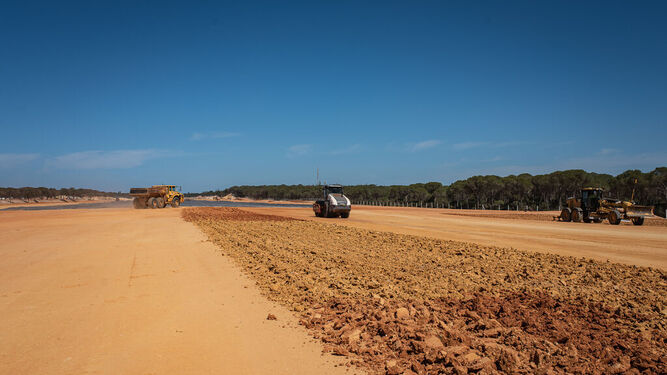
Continuing Education Master’s Degree, taught jointly at the facilities of the Higher Technical School of Engineering. And the words Master’s and Sciences (University of Huelva) and at the CEUS-CEDEA centres of the National Institute for Aerospace Technology (INTA). The Centre for Unmanned Systems Testing (CEUS) has the largest and best-equipped complex in Europe for testing, training and developing unmanned aircraft.


About the Master’s
Welcome to the Permanent Training Master’s in High-Performance Unmanned Aerial Systems (UAS/RPAS) by the University of Huelva (UHU) and the National Institute for Aerospace Technology (INTA), delivered at the University of Huelva’s School of Engineering facilities and at INTA’s CEUS-CEDEA centres.
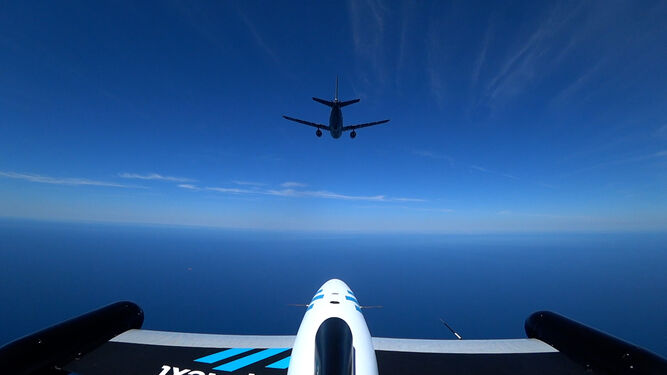
This Master’s is the first and longest-running in Spain and in continental Europe. It specialises in all types of UAS/RPAS, from mini (grams) to heavy (tonnes), and from short-range (metres) to ultra-long-range (thousands of kilometres).
One of the priorities of the Permanent Training Master’s in High-Performance Unmanned Aerial Systems (UAS/RPAS) by the University of Huelva (UHU) and the National Institute for Aerospace Technology (INTA) is the professional development of its students in the aerospace industry, specifically in the UAS/RPAS sector, and it aims to serve as a bridge between the University and the business sector.
Its main objective is to supply specialised UAS/RPAS professionals to the CEUS-CEDEA complex, to the surrounding business ecosystem and, in general, to the national and international aeronautics sector. Completing this Master’s offers students a strong chance of employment due to the need to hire professionals in this field of aeronautics.
DURATION
450 hours
PRICE
€6,000
MODE
On-site
SCHEDULE
4:00 PM – 8:30 PM
Find Answers to Your Questions
Who is the Master's program for?
The recommended profile for admission to the Master’s program is to hold a university degree in Engineering, Sciences, or equivalent. However, the Academic Committee of the Master’s program may consider other academic qualifications for admission, subject to prior analysis of the student’s curriculum.
For students who have not yet completed their university studies but are close to doing so, the Master’s Academic Committee may authorize enrollment. However, once the Master’s program is completed, they will not be able to apply for the degree until official documentation confirming the completion of their undergraduate degree is provided. In the meantime, the Master’s Secretariat may issue a certificate confirming successful completion of the program.
Where is the Master's program taught?
The Master’s program is taught primarily at the Higher Technical School of Engineering of the University of Huelva (Huelva) and at the “CEUS-CEDEA” centers of the National Institute of Aerospace Technology (Municipality of Moguer).
How long does the Master's program last?
The Master’s program has a duration of 450 hours distributed over approximately 8 months (from November to June of the following year). The course, comprising academic and practical activities at the University of Huelva and the National Institute of Aerospace Technology (INTA), begins in early November and ends in late June of the following year. Throughout the entire course, students will carry out the Master’s Final Project.
What career opportunities does it offer?
- Design and construction of civil and military RPAS.
- Propulsion, power sources, and energy.
- Control, navigation, and simulation systems.
- Avionics, communications, and networks.
- Civil and military payloads.
- Operations and maintenance of civil and military RPAS.
- Regulations, qualification, and certification of RPAS.
- Entrepreneurship option for creating your own company.
What is the cost of the Master's program?
The Master’s program costs €6,000, which can be paid in 2 installments.
How many students are admitted per academic year?
Each edition of the Master’s program admits a maximum of 30 students in order to ensure training quality and individualized monitoring of each student.
How are students selected?
When pre-registering, the student must submit documentation regarding their university education and curriculum vitae which, once analyzed by the Academic Committee of the Master’s program, allows establishing an order of priority for enrollment. The student is personally informed of the process at all times.
When does the academic year begin and end?
Academic and practical activities at the University of Huelva (UHU) and the National Institute of Aerospace Technology (INTA) begin in early November and end in late June of the following year. Throughout the entire course, students will carry out the Master’s Final Project.
What professional competencies will I acquire in the Master's program?
- Have basic knowledge of atmosphere and meteorology.
- Acquire knowledge of meteorology applied to aviation.
- Know information sources that show predictions of atmospheric behavior, as well as their interpretation.
- Understand how a UAS flies in all phases of flight.
- Analyze UAS performance.
- Understand how a UAS is controlled.
- Know the control techniques and systems applicable to UAS.
- Analyze UAS stability.
- Understand how the UAS responds to the actuation of control surfaces.
Analyze flight trajectories. - Analyze flight operations.
- Understand the fundamentals of rotary-wing UAS flight.
- Understand the fundamentals of propulsive force generation in aircraft.
- Know the air navigation system.
- Understand how different navigation systems work.
- Perform route planning.
- Know the basic fundamentals of electrical and electronic systems onboard a UAS.
- Know the classification, typology, applications, industry, and market of UAS.
- Understand the fundamentals of batteries and supercapacitors.
- Know the particularities of power plants for UAS.
- Know the regulations and rules for the integration of UAS into airspace.
- Know the systems for the integration of UAS into airspace.
- Know the regulations and processes for the qualification and certification of UAS.
- Know the fundamentals of design and manufacturing processes of UAS.
- Know the techniques and processes for UAS maintenance.
- Know the advanced applications of UAS.
- Know the instrumentation and data fusion techniques applicable to UAS.
- Know the modeling and simulation techniques applicable to UAS.
- Know communication systems and networks and their regulations.
- Know and be able to integrate payloads applicable to UAS.
- Have a general overview of perception systems that can be integrated into UAS, as well as computer vision techniques for their maximum exploitation.
- Have a general overview of the scientific, technological, and commercial scope of UAS.
- Have a general overview of employment opportunities in the field of UAS.
- Have a general overview of the development prospects for UAS technologies and market.
- Know how to perform technical inspections with UAS.

Press room
Secure your professional future in the UAS/RPAS industry
High employability
Students enter the job market quickly due to demand from companies in the sector, which need to find qualified professionals in this aeronautics field.
Professional focus
Part of the Master’s academic training will focus on students’ professionalisation through the practical training provided throughout the course.
Multidisciplinary entry profiles
We train you to become a fully qualified professional across the full range of current and future UAS/RPAS on the market, from just a few grams to tonnes in weight.

For the second time, I had the opportunity to take part as a lecturer in the RPAS Master’s delivered by the University of Huelva. It is very gratifying to see the students’ attention and willingness, as well as the welcome they give me each year.
Congratulations to the Master’s management team for the work you do. This year we are delighted once again to welcome two new graduates for their training period at AERTEC.
Benjamín Colomer
AERTEC. Aerospace & Defence Systems. Project Manager
My name is Adrián Capilla Lozano. I am an industrial and automation electronics engineer and a member of the 4th edition of the medium- and large-size RPAS Master’s, delivered in Huelva.
When I finished my undergraduate degree, I thought I should continue training and specialise in a field with a great future ahead. I have always been drawn to aeronautics, new technologies and researching in a sector as emerging and exciting as the world of UAVs, or RPAS. So I started looking for a Master’s that would meet the mark, and I found the University of Huelva’s RPAS Master’s: a highly practical programme with a curriculum that covers all areas of this technology (aeronautics, renewable energy, electronics, design, navigation, certification and many more subjects), an unmatched teaching staff—since most are leading professional references in their fields with many years of experience—and, combined with the large number of lecturers, it provides a depth of knowledge that cannot be obtained in any other Master’s of this type in Europe.
It also benefits from collaboration with INTA (National Institute for Aerospace Technology), as well as the El Arenosillo Experimentation Centre (CEDEA) near Huelva, where you can carry out many of the field classes offered by the Master’s, learning from real large RPAS operations and seeing first-hand the most cutting-edge equipment in the sector.
Adrián Capilla Lozano
After graduating in Biology, my personal interest in UAVs and autonomous systems led me to look into master’s programmes to specialise in this sector. I chose the University of Huelva’s RPAS Master’s because of its job placement in the RPAS sector in Spain, as well as the quality of the teaching staff, drawn both from the University of Seville and from professionals with extensive experience in the sector.
I decided to enrol and move to Huelva to take the Master’s in October 2017. Today, April 2018, and close to finishing the theoretical training, I can say it is a unique opportunity to enter this sector, even for students coming from fields outside engineering (as in my case), since this Master’s brings together all the important concepts and provides the experience needed to carry out professional work.
As for career prospects, I have already signed an agreement with a company to complete the 400-hour training period, with the possibility of joining the company once that period is finished. The Master’s does not guarantee you a contract, but it does offer the possibility of obtaining one on your own merits, placing you at the right time and in the right place.
Santiago Gambón
Learn about the CEUS project
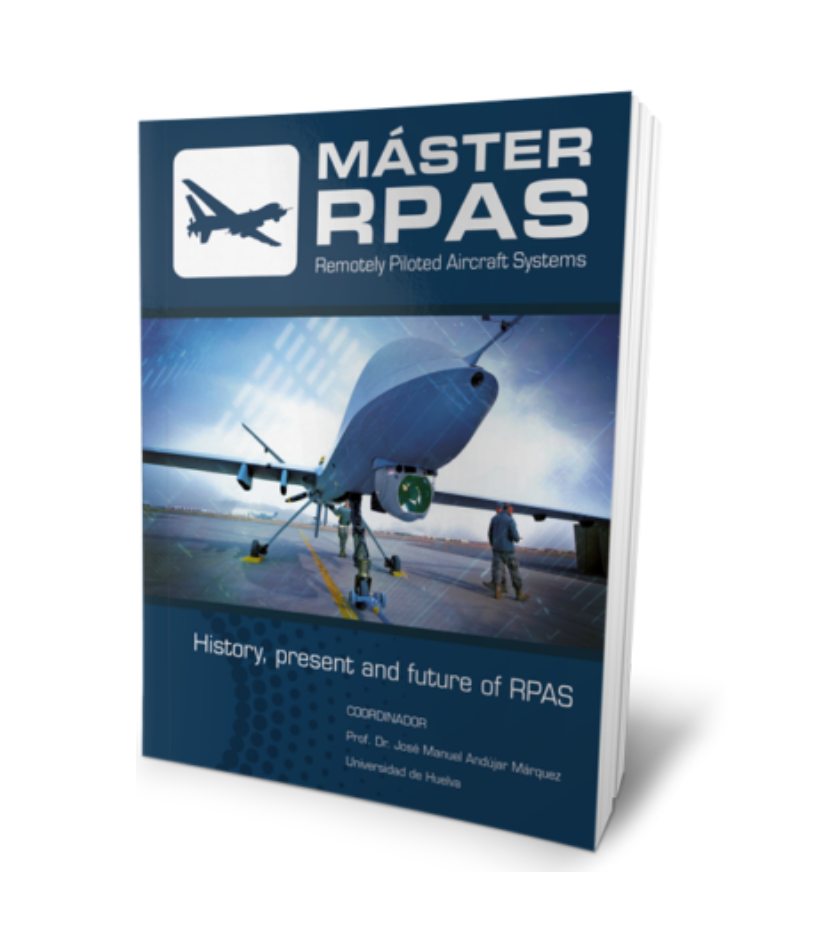

History, present, and future of RPAS
- Origin of the first RPAS
- Analysis of an emerging sector
- Career outlook
Make an Inquiry
"*" indicates required fields

